
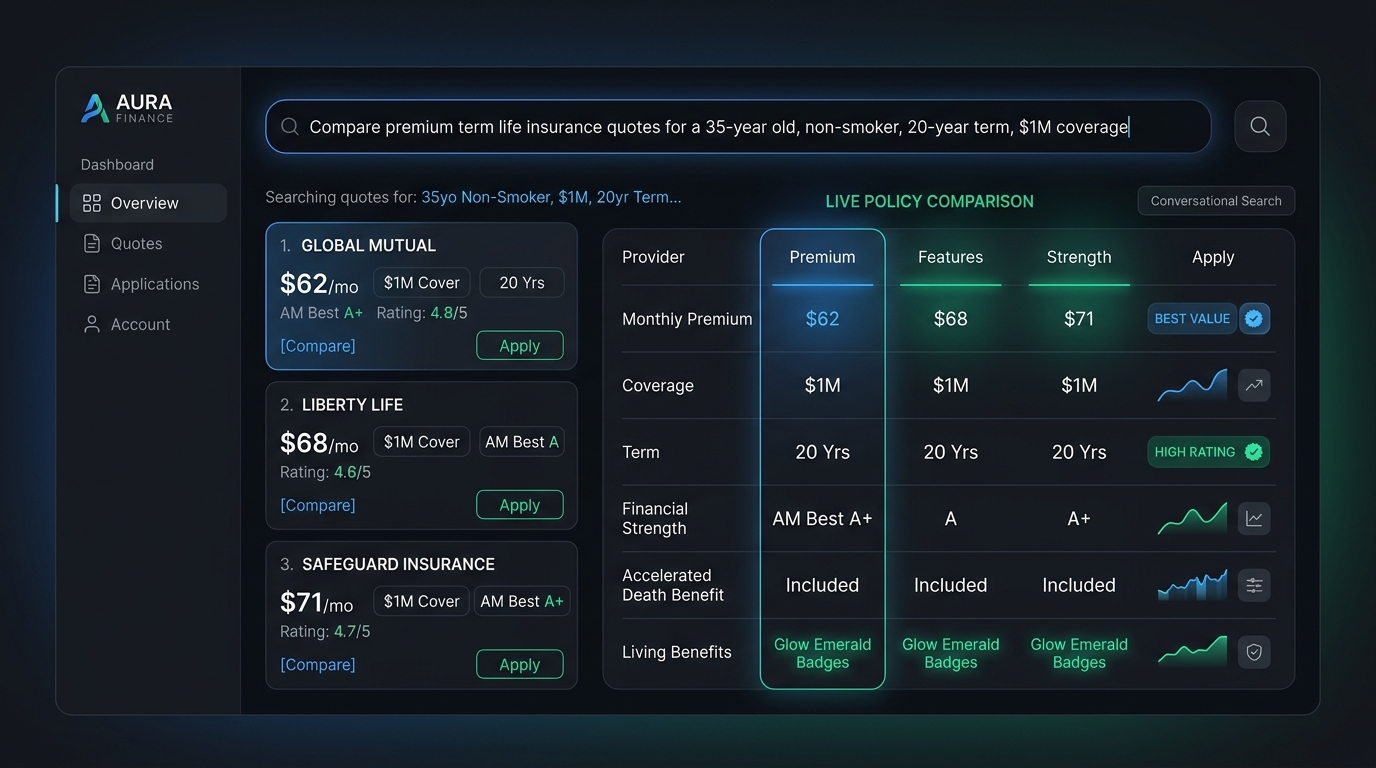
In the consumer search landscape, search metrics are measured in terms of relevance, engagement, and click-through rates. During my tenure at Google on the Core ML (later AI2) team, focusing on machine learning infrastructure and TPU efficiency, we optimized for the nuance of human curiosity. But in fintech, the stakes are fundamentally different.
When a user asks a financial platform, "What was my net return on tax-advantaged accounts after the Q3 rebalancing, and how does it compare to my taxable brokerage performance?" the tolerance for error is absolute zero.
A hallucinated digit or a misplaced decimal point isn’t a poor user experience—it is a regulatory violation, a compliance failure, and a breach of fiduciary trust.
At The Zebra, and across the modern fintech landscape, building conversational interfaces requires moving past the fragile "system prompt + raw LLM wrapper" paradigm. We must transition to a Zero-Trust Semantic Architecture. This article outlines the engineering blueprint for integrating highly reliable, deterministic natural language search interfaces into financial platforms.
1. The Architectural Failure of Native LLMs in Finance
Standard Large Language Models (LLMs) are stochastic prediction engines. They excel at mapping semantic similarity but struggle with exact rule execution, mathematical computation, and state preservation. If you connect an LLM directly to a database via naive Tool Calling (Function Calling), you invite several critical failure modes:
- Semantic Drift: The model misinterprets a financial term (e.g., confusing "yield" with "dividend rate").
- Parameter Injection & Hallucinated Arguments: The LLM invents non-existent API parameters or generates malformed dates (e.g.,
2024-02-31). - Execution Path Non-Determinism: The same prompt executed twice can lead to two entirely different API orchestration paths.
- Data Leakage & Unauthorized Access: The model accesses data structures outside the user’s authorized Scope of Access (broken Object-Level Authorization).
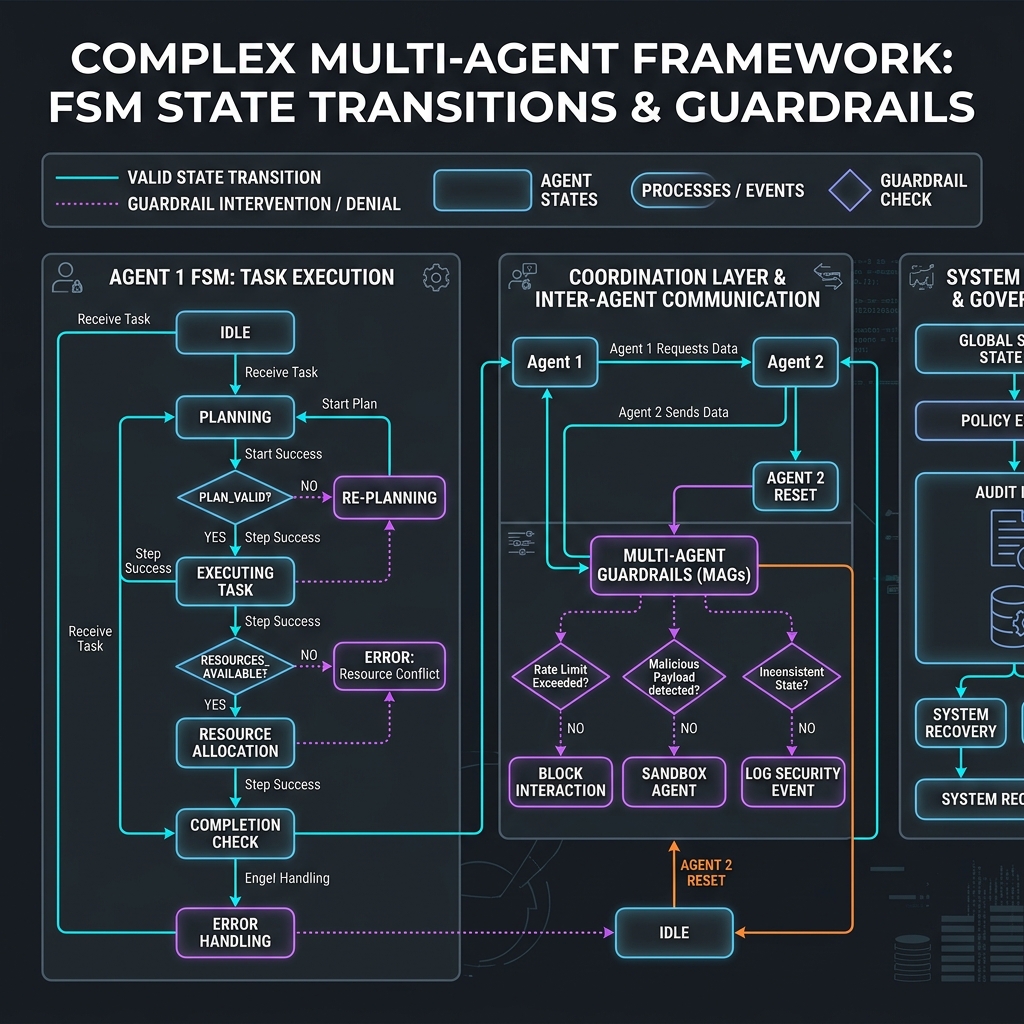
To solve this, we must decouple intent understanding from execution routing. The LLM’s role must be restricted to parsing the user's unstructured request into a highly structured, strictly typed intermediate representation (IR). Execution of that IR is then handled by a deterministic, zero-trust state machine.
2. The Blueprint: Deterministic Tool Orchestration (DTO)
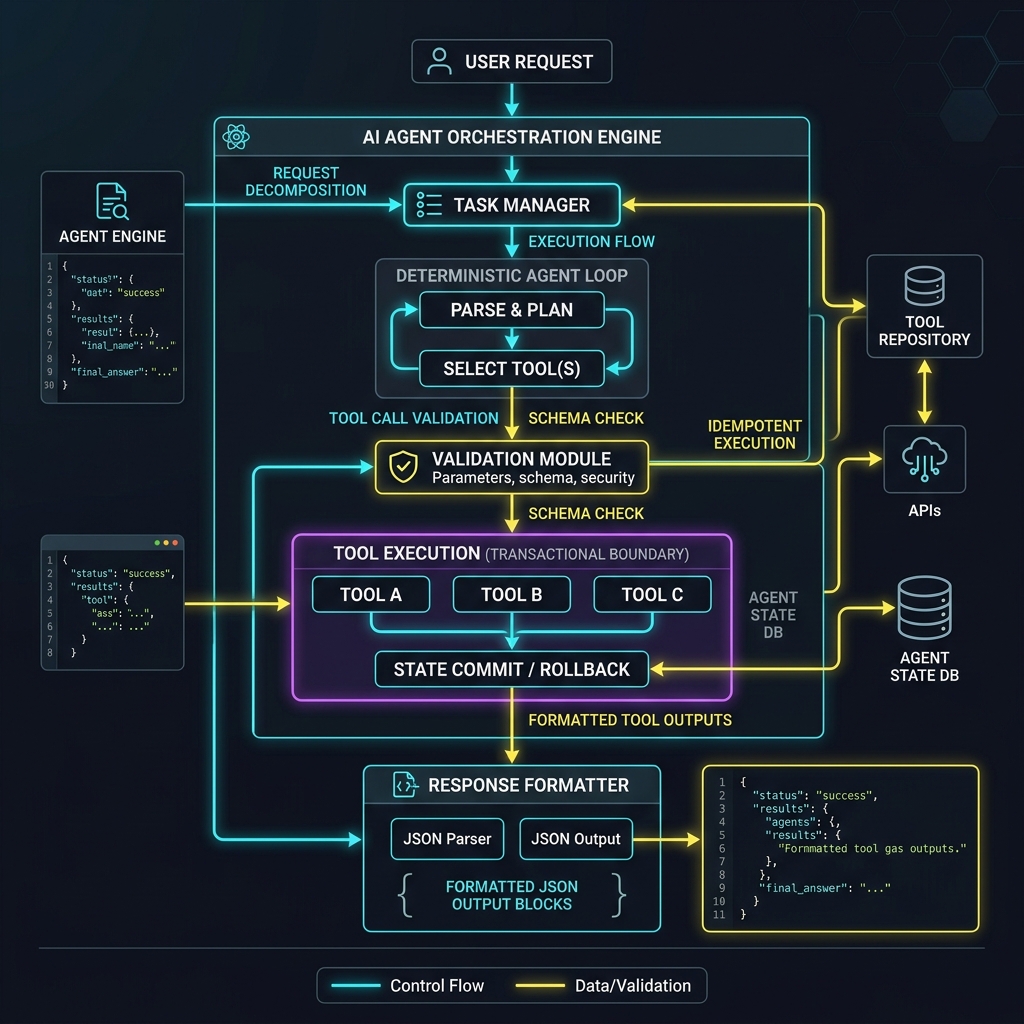
Deterministic Tool Orchestration (DTO) enforces a strict boundary between unstructured natural language and transactional databases. Rather than giving an LLM autonomous agency to call APIs, we build a multi-layered verification pipeline.
       [ Unstructured User Query ]
                    │
                    ▼
       [ Semantic Parsing Layer ] ──► (DSPy Compiled Program)
                    │
                    ▼
    [ Strongly-Typed Intermediate AST ]
                    │
                    ▼
     [ Zero-Trust Validation Layer ] ──► (RBAC, PII, Guardrails)
                    │
                    ▼
   [ Deterministic Orchestration Engine ] ──► (Strict State Machine / APIs)
                    │
                    ▼
      [ Normalized JSON Response ]
                    │
                    ▼
        [ Presentation / LLM Synthesis ]
Layer 1: Semantic Parsing and Intent Extraction
Instead of relying on fragile prompt engineering, we leverage frameworks like DSPy (Declarative Self-Improving Language Programs) to compile prompts that map natural language directly into a strictly typed schema (e.g., Pydantic models).
For example, the query: "Compare my Apple holding value today versus November last year" is parsed into the following Abstract Syntax Tree (AST):
{
  "intent": "HOLDING_COMPARISON",
  "entities": {
    "asset_ticker": "AAPL",
    "comparison_intervals": [
      {
        "label": "current",
        "date_range": {
          "start": "2024-11-14T00:00:00Z",
          "end": "2024-11-14T23:59:59Z"
        }
      },
      {
        "label": "historical",
        "date_range": {
          "start": "2023-11-01T00:00:00Z",
          "end": "2023-11-30T23:59:59Z"
        }
      }
    ]
  },
  "aggregation": "SUM"
}
Layer 2: Zero-Trust Validation & Policy Enforcement
Before the AST is sent to any data source, it passes through a validation layer that checks:
- Authorization (RBAC & ABAC): Does the authenticated user possess read permissions for the specific accounts returned in the AST?
- Value Constraint Checking: Are the date ranges requested within acceptable bounds? (e.g., preventing unbounded queries that could cause Denial of Service).
- Sanitization: Escaping parameters to prevent SQL injection or vector database injection attacks.
Layer 3: Deterministic Execution via State Machines
Once validated, the AST is executed by a compiled state machine. If the user query is ambiguous, the system must not guess. Instead, the state machine triggers a deterministic disambiguation flow (e.g., returning a structured prompt to the UI asking, "Do you mean your individual taxable brokerage account or joint retirement account?").
3. Comparing Orchestration Strategies
Choosing the right orchestration strategy involves balancing latency, reliability, and security. The following table contrasts the primary approaches:
| Orchestration Strategy | Mechanism | P95 Latency (ms) | Deterministic Accuracy | Compliance & Security Profile |
|---|---|---|---|---|
| Raw LLM Tool-Calling | Direct model-to-API agentic execution via system messages. | 850ms – 2100ms | Low (~82%) | Unacceptable: Susceptible to hallucinations and parameter injection. |
| Semantic RAG with Vector Search | Retrieval of unstructured documents mapped via cosine similarity. | 300ms – 600ms | Medium (~91%) | Restricted: Safe for FAQs, unsafe for transactional or ledger inquiries. |
| Hybrid Guardrailed Semantic Parsing | LLM compiles input to a Pydantic AST; validated by a rule engine before API execution. | 250ms – 450ms | High (>99.9%) | Audit-Ready: Perfect lineage tracing, zero-trust enforcement. |
4. Mitigation of Semantic Drift: Real-Time Constraint Validation
To achieve sub-300ms latencies and preserve mathematical precision, financial platforms must implement dual-path validation.
Path A: Natural Language Guardrails
Before processing, we evaluate the query vector against custom embedding spaces trained specifically on malicious or out-of-domain intents (e.g., using a lightweight classifier model like a fine-tuned SetFit or DeBERTa). If the query falls outside domain parameters, it is flagged and short-circuited.
Path B: Execution-Tier Guardrails (The Final Gate)
Even if the parser succeeds, the output is verified programmatically. Here is a production-grade Python abstraction illustrating how an extracted intent payload is validated against strict domain schemas before database execution:
from pydantic import BaseModel, Field, validator
from datetime import datetime, timedelta
from typing import List, Optional

class DateRange(BaseModel):
    start: datetime
    end: datetime

    @validator('end')
    def validate_range(cls, v, values):
        if 'start' in values and v < values['start']:
            raise ValueError("End date must be chronological after start date")
        if v > datetime.utcnow():
            raise ValueError("Future dates are not authorized for ledger queries")
        return v

class FinancialQueryAST(BaseModel):
    intent: str
    tickers: List[str] = Field(..., max_items=5)
    date_range: DateRange
    user_id: str

    @validator('tickers')
    def validate_tickers(cls, v):
        allowed_assets = {"AAPL", "MSFT", "GOOGL", "AMZN", "TSLA", "VTI", "VXUS"}
        if not set(v).issubset(allowed_assets):
            unauthorized = set(v) - allowed_assets
            raise ValueError(f"Unauthorized asset query attempt on: {unauthorized}")
        return v
This strict architectural constraint ensures that the dynamic power of natural language interfaces is bound safely within the rails of a legacy transactional core.
5. Summary: The Golden Rules of Financial NL Interfaces
When deploying conversational search capabilities in a highly regulated financial setting, remember these non-negotiables:
- Decouple Generation from Execution: Never let an LLM call an API or write a query directly. Use the model exclusively as a translator to an intermediate, strongly typed structure.
- Never Guess Ambiguity: If the user’s intent is unclear or mathematically ambiguous, force a UI-driven clarification step rather than risking a hallucinated assumption.
- Keep Evaluation Grounded: Use code-based regression tests (e.g., evaluating AST precision against expected test scenarios) rather than LLM-as-a-judge approaches for performance evaluation.
By adhering to this deterministic orchestration framework, financial engineering teams can harness the immense UX benefits of natural language interfaces without exposing their platforms to regulatory, compliance, or security hazards.
Frequently Asked Questions (FAQ)
How do you handle PII and sensitive data when routing queries through third-party LLMs?
We employ an in-line tokenization and anonymization proxy at the edge. Before any prompt payload leaves our Virtual Private Cloud (VPC), all Personally Identifiable Information (PII) like account numbers, names, and exact currency amounts are replaced with cryptographic, non-invertible tokens (e.g., [USER_ID_1] or [ACCOUNT_TOKEN_A]). The mapping ledger remains localized inside our secure infrastructure and is re-hydrated only after the LLM parses the structural query back to our internal systems.
What is the role of Vector Search vs. Relational Database Queries in natural language financial platforms?
They solve two completely different tasks. Vector Search is optimized for unstructured documents—such as mapping a user's question to a specific clause inside a 300-page prospectus or SEC filing. Relational Database queries (SQL/GraphQL) are required for precise, quantitative data (e.g., account balances, historical performance, transaction histories). A high-performance financial search interface uses a semantic router to decide if a query should target a vector store, a structured database, or a hybrid of both.
How do you prevent LLMs from generating SQL Injection queries when utilizing Text-to-SQL?
We strictly prohibit direct text-to-SQL generation inside transaction pipelines. Instead of allowing an LLM to generate raw SQL strings, the LLM maps user inputs to structured Abstract Syntax Trees (ASTs) or parameterized API queries. These inputs are subsequently mapped to static, pre-compiled queries using an Object-Relational Mapper (ORM) with parameterized inputs, preventing any dynamic injection vectors.
{
  "@context": "https://schema.org",
  "@graph": [
    {
      "@type": "TechArticle",
      "@id": "https://danielherrington.com/integrating-natural-language-search-interfaces-financial-platforms#article",
      "headline": "Engineering Zero-Trust Natural Language Search in Financial Platforms: A Deterministic Orchestration Framework",
      "description": "A deep dive into building deterministic, zero-trust natural language search interfaces for financial platforms with strict performance and security metrics.",
      "inLanguage": "en-US",
      "mainEntityOfPage": "https://danielherrington.com/integrating-natural-language-search-interfaces-financial-platforms",
      "datePublished": "2024-11-14T08:00:00+00:00",
      "dateModified": "2024-11-14T08:00:00+00:00",
      "author": {
        "@type": "Person",
        "name": "Daniel Herrington",
        "jobTitle": "Chief AI Officer",
        "worksFor": {
          "@type": "Organization",
          "name": "The Zebra"
        }
      },
      "about": [
        {
          "@type": "Thing",
          "name": "Natural Language Processing"
        },
        {
          "@type": "Thing",
          "name": "Fintech Search Architecture"
        },
        {
          "@type": "Thing",
          "name": "Deterministic Systems"
        }
      ]
    },
    {
      "@type": "FAQPage",
      "@id": "https://danielherrington.com/integrating-natural-language-search-interfaces-financial-platforms#faq",
      "mainEntity": [
        {
          "@type": "Question",
          "name": "How do you handle PII and sensitive data when routing queries through third-party LLMs?",
          "acceptedAnswer": {
            "@type": "Answer",
            "text": "We employ an in-line tokenization and anonymization proxy at the edge. Before any prompt payload leaves our secure Virtual Private Cloud (VPC), all Personally Identifiable Information (PII) like account numbers and names are replaced with cryptographic, non-invertible tokens. The mapping ledger remains localized and is re-hydrated only after the LLM parses the structural query back to our internal systems."
          }
        },
        {
          "@type": "Question",
          "name": "What is the role of Vector Search vs. Relational Database Queries in natural language financial platforms?",
          "acceptedAnswer": {
            "@type": "Answer",
            "text": "Vector Search is optimized for searching unstructured documents like compliance filings and PDFs using semantic similarity. Relational Database queries (SQL/GraphQL) are mandatory for transaction ledgers and financial math where exact values, structured constraints, and complete determinism are required."
          }
        },
        {
          "@type": "Question",
          "name": "How do you prevent LLMs from generating SQL Injection queries when utilizing Text-to-SQL?",
          "acceptedAnswer": {
            "@type": "Answer",
            "text": "Direct text-to-SQL generation is prohibited in production pipelines. LLMs map inputs to strictly structured Abstract Syntax Trees (ASTs) or parameterized API schemas. These inputs are subsequently evaluated by an ORM with parameterized inputs, removing the threat of SQL injection."
          }
        }
      ]
    }
  ]
}
Suggested Image Strategy
To maintain the authenticity and publication-grade authority of Daniel Herrington's portfolio, place these images at their corresponding contextual positions within your CMS:
daniel-herrington-state-transitions.jpg: Place immediately below Section 1. This should be an authoritative headshot of Daniel in an office or presenting environment, with alt text detailing the context of deterministic state execution.daniel-herrington-deterministic-orchestration-architecture.jpg: Place immediately below Section 4. This image should depict a high-contrast whiteboard session or technical workflow diagram overlaying Daniel’s technical reviews.