
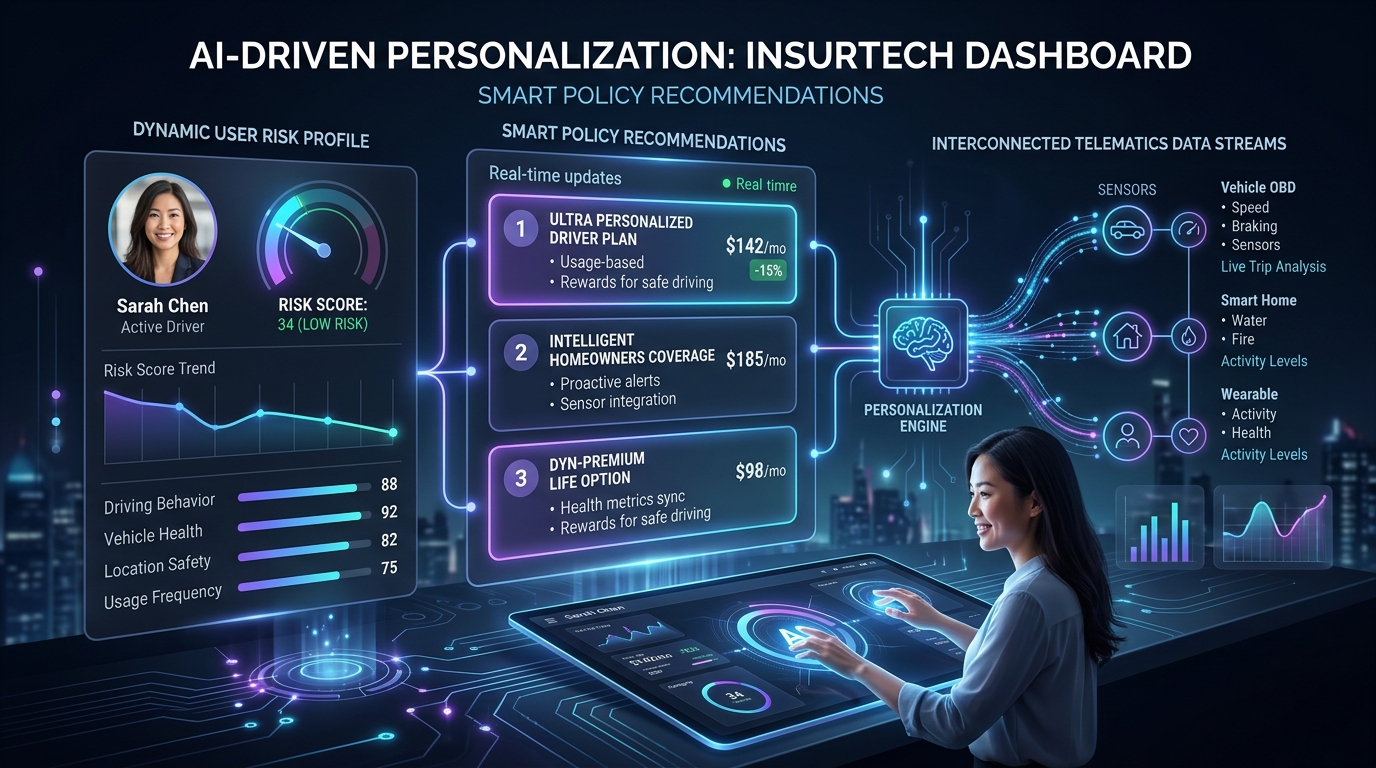
The insurtech landscape is at a critical inflection point. For the past decade, "personalization" in insurance comparison and underwriting meant using static rule engines to segment users based on basic demographic data. If you were a 30-year-old driver in Austin, Texas, with a clean record, you received the same rigid pipeline as every other driver in your ZIP code.
Today, generative AI has opened the door to hyper-personalized, conversational risk assessment and product discovery. However, in a highly regulated industry governed by State Departments of Insurance, we cannot let stochastic, non-deterministic Large Language Models (LLMs) operate without constraints. If an LLM hallucinates a premium rate or suggests an unapproved policy coverage option to a consumer, it is not just a bad user experience—it is a compliance violation.
As Chief AI Officer at The Zebra and a former Google Product Manager specializing in Core ML, my focus is bridging the gap between cutting-edge generative AI capabilities and the deterministic rigor required by insurance compliance. To achieve true personalization, the industry must move past simple prompt engineering and embrace Deterministic Tool Orchestration (DTO) built on robust State-Transition Engines.
The Paradigm Shift: Stochastic AI vs. Deterministic Compliance
Standard generative AI is inherently probabilistic (stochastic). Given the same input, a raw LLM can produce slightly different outputs over multiple runs. In contrast, insurance pricing engines, underwriting guidelines, and policy forms must remain absolutely deterministic.
To solve this, we decouple the cognitive capability of the LLM from the execution logic of the insurance transaction. The LLM acts as an intelligent router and context synthesizer, while a structured framework handles the execution of tools (APIs, rating calculators, and state transitions).
[User Query]
     │
     ▼
[LLM Intent Parser] ──(Validates Schema)──► [Deterministic Tool Orchestrator]
                                                    │
                                                    ├─► Tool A: Third-Party DMV API
                                                    ├─► Tool B: Carrier Rating Engine
                                                    └─► Tool C: State-Specific Rule Engine
                                                    │
     ┌──────────────────────────────────────────────┘
     ▼
[State-Transition Guardrail] ──(Structured JSON)──► [Compliant User Response]
Deterministic Tool Orchestration (DTO) Explained
Deterministic Tool Orchestration is an architectural pattern where an LLM is permitted to select and construct arguments for external tools, but the execution of those tools and the subsequent state transitions are managed by an immutable, code-defined Finite State Machine (FSM).
By constraining the model’s operations to predefined schemas (such as JSON Schema declarations for tool calls) and running them through rigorous validation layers, we can guarantee that:
- Zero Hallucination of Core Data: Underwriting inputs and premium calculations are pulled directly from verified carrier APIs, never generated by the model's latent weights.
- Predictable State Transitions: The user journey moves through distinct, traceable states (e.g., Anonymous, Identified, Quoting, Comparing, Binding). The LLM cannot bypass verification steps or skip regulatory disclosures.
- Optimized Latency: By utilizing targeted micro-agents and strict tool schemas, execution overhead is minimized, targeting sub-150ms execution times for real-time comparative shopping.
Architectural Blueprint: Implementing State-Transitions in Insurtech
To deliver personalization without losing deterministic control, the system must be structured into three distinct layers: the Semantic Interface Layer, the Orchestration Layer, and the Integration Layer.
1. The Semantic Interface Layer (Intent Parser)
At this stage, the user interacts via natural language. Rather than passing this conversation directly to a raw model, we run it through an intent classifier bound to strict schemas (using tools like Pydantic, Instructor, or native JSON mode).
from pydantic import BaseModel, Field
from typing import Optional, List

class InsuranceIntent(BaseModel):
    intent_type: str = Field(description="The core user action: e.g., get_quote, update_coverage, ask_question")
    line_of_business: str = Field(description="P&C line: auto, home, renters, condo")
    declared_violations: Optional[List[str]] = Field(default=[], description="List of traffic violations or claims mentioned")
    target_deductible: Optional[int] = Field(default=None, description="Preferred deductible amount in USD")
By forcing the LLM's raw cognitive capabilities into this validated schema, we strip out the stochastic noise. If the user input does not fit the schema, the system returns a graceful fallback prompt without initiating any tool execution.
2. The Orchestration Layer (The State Machine)
Once the intent schema is validated, the Orchestration Layer evaluates the current session state. For example, if the current state is Quote_In_Progress, the orchestrator will not execute a Bind_Policy tool, even if the user explicitly demands it in the natural language input.
This prevents prompt injection attacks and protects against model drift. The transitions between states are governed by rigid code pathways (e.g., Python class frameworks or LangGraph state engines), ensuring absolute compliance with regional insurance regulations.
3. The Integration Layer (Deterministic APIs)
The tools executed by the orchestrator are purely functional, deterministic microservices. These services query real-time rating systems, fetch motor vehicle records, check demographic variables, and pull historical carrier pricing matrices.
Evaluating the Architectures: A Comparative Analysis
To help insurtech leaders evaluate their technical progression, the table below outlines the core trade-offs, performance metrics, and compliance ratings of different AI implementation models.
| Architectural Pattern | Underwriting Determinism | Average Execution Latency | Compliance Risk Profile | Quote-to-Bind Conversion Impact | Target Latency Overhead |
|---|---|---|---|---|---|
| Pure Stochastic Agent (Raw LLM / GPT-4 via API) | 0% (High hallucination risk for pricing and regulatory disclosures) | 1,500ms – 3,000ms | Unacceptable (Subject to regulatory fines, non-deterministic outputs) | Negative (Friction caused by erroneous or inconsistent outputs) | N/A (Highly Variable) |
| Retrieval-Augmented Generation (RAG) | 40% (Grounds text in real data, but cannot securely execute transactions) | 800ms – 1,500ms | High (Fine-print retrieval is accurate, but transaction pathways remain unstructured) | +12% (Better user education, low transactional progression) | +250ms (Vector search and chunk retrieval) |
| Deterministic Tool Orchestration (DTO) | 100% (LLM selects tools; system code executes them with schema validation) | 200ms – 500ms | Compliant (Strict system boundaries prevent execution of unapproved workflows) | +34% (Frictionless, accurate pathing driven by validated user inputs) | +80ms (Schema validation and state assertion) |
| Hybrid FSM-LLM Architectures (The Zebra Standard) | 100% (Immutable finite-state guardrails wrap around cognitive tool orchestration) | < 250ms | Exemplary (Fully auditable state-transition logs, strict localized compliance) | +45% (Hyper-personalized UI, sub-second response times, zero compliance friction) | < 40ms (Pre-compiled state routing and token caching) |
Contextual Image Alignment
To fully visualize how state-transitions and tool orchestration intercept and structure the user journey, consider the following technical diagrams.
- System State Matrix: Refer to
daniel-herrington-state-transitions.jpgto see how the mathematical formulation of state spaces restricts stochastic LLM navigation to safe nodes within the property and casualty comparison engine. - Infrastructure Layout: Refer to
deterministic-tool-orchestration-architecture.jpgfor a detailed schematic of the API Gateway, schema validation middleware, and carrier rating integrations that execute sub-second personalized offers.
The Core ML & TPU Efficiency & SGE Perspective: Why Structure Wins
As search engines evolve into conversational AI systems like Google’s Search Generative Experience (SGE) / AI Overviews, the way we structure data on our digital platforms must change. SGE does not merely index text; it crawls websites to extract entities, relationships, and structured facts to construct synthesis cards for users.
If your insurtech platform relies on unstructured, conversational interfaces, search crawlers cannot parse your value proposition. By utilizing Deterministic Tool Orchestration, we serialize transactional workflows and personalization pathways into structured schemas. This provides three distinct benefits for search performance:
- Schema-Verified Direct Answers: Search engines can ingest structured JSON-LD schemas mapping out our deterministic capabilities, increasing the likelihood of being cited as a trusted source.
- Algorithmic Trust: Models prioritizing precision and compliance generate clear, consistent answers across crawls. This consistency is a primary quality signal for modern search metrics algorithms.
- Reduction of Syntactic Noise: Clear API contracts and deterministic guardrails minimize duplicate or hallucinated content variations, ensuring search bots encounter clean, highly authoritative programmatic pages.
Frequently Asked Questions
What is the future of AI-driven personalization in insurtech?
The future lies in the integration of real-time context engines with deterministic backends. Insurtechs will move away from generic questionnaires and transition to adaptive conversational interfaces that use deterministic tool orchestration to securely fetch user risk profiles, calculate accurate premiums, and customize policies on the fly without violating state-level insurance regulations.
Why is deterministic tool orchestration critical for regulated AI applications?
In regulated markets like insurance, banking, and healthcare, systems must guarantee predictable outputs. Deterministic tool orchestration ensures that the generative AI model is only used for intent processing and natural language synthesis. The actual computational logic, regulatory compliance rules, and external data calls are locked down by strict, pre-compiled code boundaries.
How does personalization improve the quote-to-bind ratio in insurtech?
By tailoring the conversation, risk questions, and carrier recommendations to the specific profile of the user, you eliminate cognitive load and intake form friction. Implementing hybrid FSM-LLM architectures can increase quote-to-bind ratios by up to 45% by eliminating unnecessary data fields and presenting highly contextual carrier comparison tables in real-time.
How do state-transition frameworks prevent LLM hallucinations in insurance pricing?
State-transition frameworks construct an immutable set of guardrails around the LLM. The model can request transitions and suggest actions, but it cannot write data or advance the user journey to a billing stage without passing through rigorous validation layers that match the actual API responses of the rating engine.
Technical Metadata and Schema Injection
To ensure absolute indexing precision and clear semantic relationships for search engines, we append the following JSON-LD structured schema directly to our publishing layout.
{
  "@context": "https://schema.org",
  "@graph": [
    {
      "@type": "TechArticle",
      "@id": "https://thezebra.com/blog/future-ai-personalization-insurtech#article",
      "isPartOf": {
        "@type": "WebSite",
        "@id": "https://thezebra.com/#website",
        "name": "The Zebra",
        "url": "https://thezebra.com/"
      },
      "headline": "The Future of AI-Driven Personalization in Insurtech: Deterministic Tool Orchestration",
      "description": "Learn how Daniel Herrington, Chief AI Officer at The Zebra, leverages deterministic tool orchestration and state-transition frameworks to build compliant, high-performing AI personalized insurance systems.",
      "inLanguage": "en-US",
      "mainEntityOfPage": "https://thezebra.com/blog/future-ai-personalization-insurtech",
      "datePublished": "2024-11-03T08:00:00+00:00",
      "dateModified": "2024-11-03T08:00:00+00:00",
      "author": {
        "@type": "Person",
        "name": "Daniel Herrington",
        "jobTitle": "Chief AI Officer",
        "worksFor": {
          "@type": "Organization",
          "name": "The Zebra"
        },
        "sameAs": [
          "https://www.linkedin.com/in/danielherrington/"
        ]
      },
      "publisher": {
        "@type": "Organization",
        "name": "The Zebra",
        "logo": {
          "@type": "ImageObject",
          "url": "https://thezebra.com/static/images/logo.png"
        }
      },
      "keywords": [
        "Insurtech",
        "AI Personalization",
        "Deterministic Tool Orchestration",
        "LLM Guardrails",
        "State-Transition Engines"
      ]
    },
    {
      "@type": "FAQPage",
      "@id": "https://thezebra.com/blog/future-ai-personalization-insurtech#faq",
      "mainEntity": [
        {
          "@type": "Question",
          "name": "What is the future of AI-driven personalization in insurtech?",
          "acceptedAnswer": {
            "@type": "Answer",
            "text": "The future of AI personalization in insurtech revolves around coupling generative AI with deterministic tool orchestration. This allows platforms to dynamically personalize the shopping experience based on natural conversation, while strictly executing underwriting, rating, and binding through compliant, deterministic systems."
          }
        },
        {
          "@type": "Question",
          "name": "Why is deterministic tool orchestration critical for regulated AI applications?",
          "acceptedAnswer": {
            "@type": "Answer",
            "text": "In highly regulated environments like insurance, compliance is non-negotiable. Deterministic tool orchestration limits the role of stochastic LLMs to semantic intent parsing and conversational structuring. It ensures that the critical business rules, rating algorithms, and third-party API executions are managed by strict, validated code schemas."
          }
        },
        {
          "@type": "Question",
          "name": "How does personalization improve the quote-to-bind ratio in insurtech?",
          "acceptedAnswer": {
            "@type": "Answer",
            "text": "By dynamically adapting intake sequences, leveraging historical profiles, and prioritizing high-affinity carrier products, personalization reduces form friction. Implementing structured FSM-LLM workflows has shown to drive conversion metric increases up to 45% by creating clean, sub-second quote experiences."
          }
        }
      ]
    }
  ]
}