
Originally published on LinkedIn on October 19, 2026.
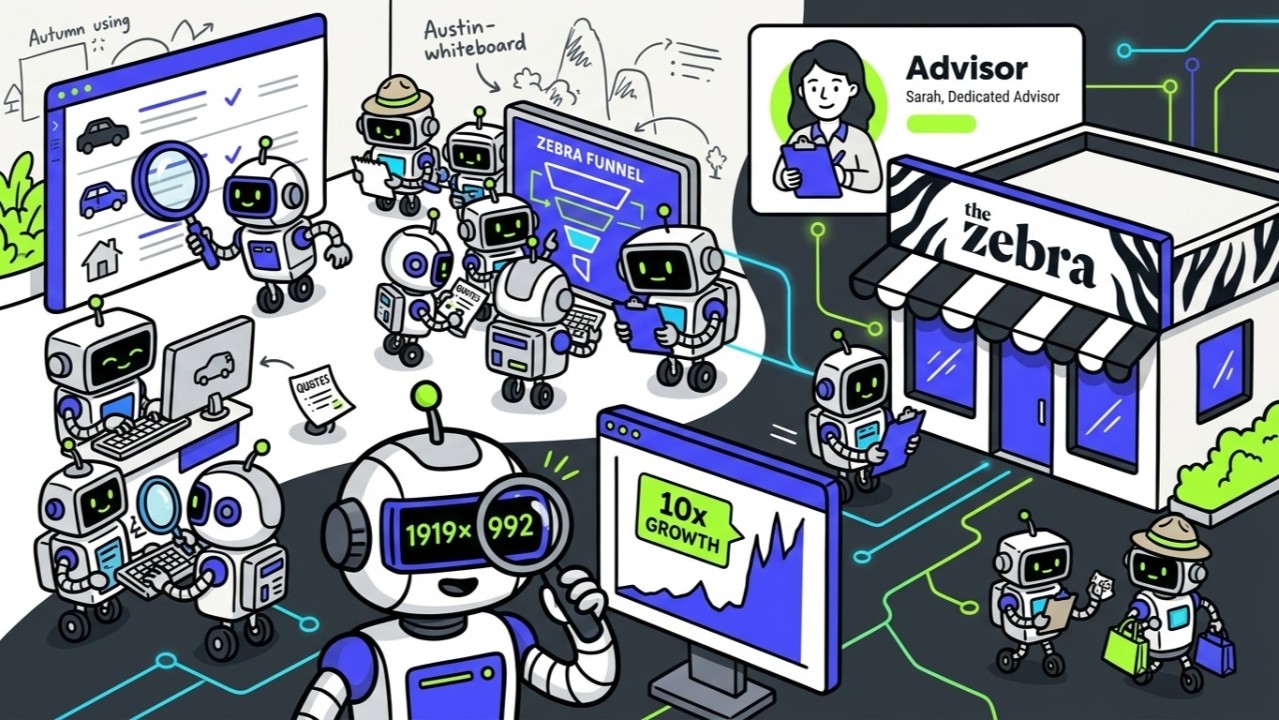
Personal AI agents are no longer a futuristic talking point for tech conferences; they are actively walking through our quote funnels at The Zebra right now.
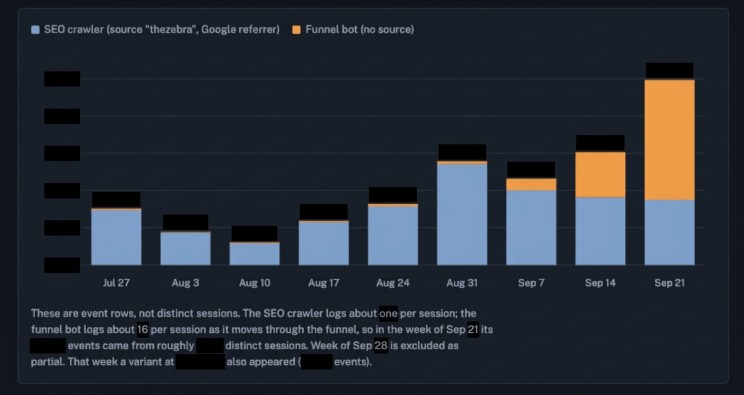
Over the past few weeks, I’ve been tracking our traffic closely as our data team uncovered a distinct, rapidly growing wave of automated personal agents navigating our platform like human shoppers, comparing rates, and completing applications at more than twice the rate of traditional desktop users. The bots have officially arrived and instead of building higher walls to keep them out, our job is to build a safe, compliant front door to let them in.
Every afternoon when I pull into my driveway, I get a physical reminder of what happens when an industry builds interfaces around legacy technology instead of the customer. I used to drive a Tesla, so I had a sleek Tesla NACS charger installed at my house. Recently, I switched to a Cadillac EV. Now, every time I go to plug my car in, I have to wrestle with a massive, clunky adapter that bridges the NACS charger to the CCS port on my Cadillac.
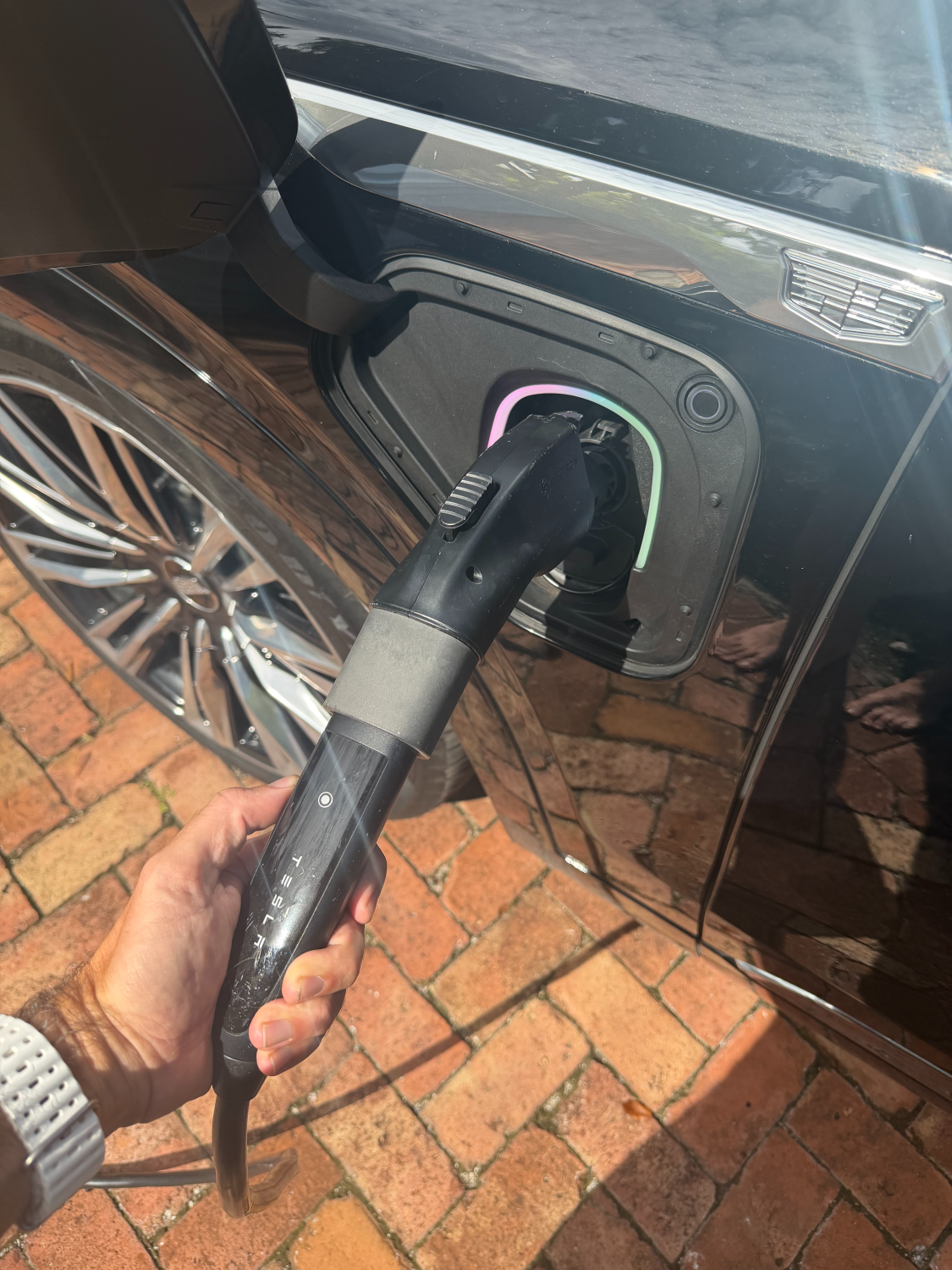
The history behind those two plugs is a classic story in product design. The NACS plug was designed from scratch with the customer experience in mind: lightweight, effortless, and unburdened by existing automotive paradigms. The CCS standard, on the other hand, was designed by an industry committee trying to bolt fast-charging pins onto an older plug design, essentially telling drivers, "We know what you want, but this clunky two-part system is what you’re getting."
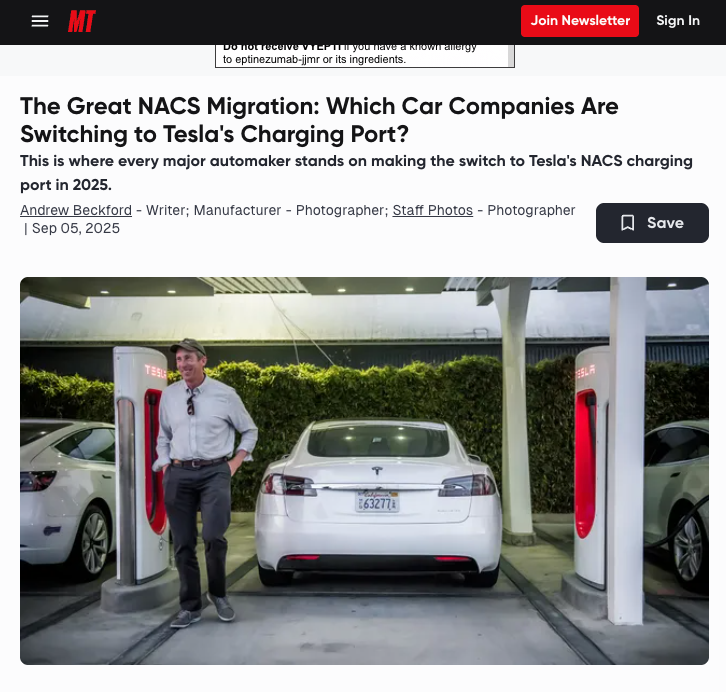
We all know how that story ended. Nearly every major automaker has surrendered to the customer-centric design and adopted NACS. By the time I upgrade my Cadillac a few years from now, I doubt I’ll even be able to find a CCS port.
Right now, the AI industry is having its own NACS-versus-CCS moment. As personal agents like Hermes, Instinct, Muse, Grok, Claude, and Gemini start acting on behalf of consumers across the open web, we have to decide how we are going to meet them.
The Tell-Tale Pixel: How We Spotted the Agents in Our Funnel
For months, we’ve known in theory that anyone with a personal AI agent could task it with shopping for car or home insurance. You don’t need an official API to do it. You just tell your agent what coverage you’re looking for, and it spins up a headless web browser, navigates comparison sites, fills out forms, and scrapes the results just like a human would.
In September, that theory turned into hard telemetry on our site.
Our traffic quality team was investigating desktop data when they noticed something unusual. When real humans browse the web on a standard 1920×1080 monitor, their browser viewport—the visible page area minus the browser toolbars and the operating system taskbar—varies wildly. Between January and June of this year, we recorded 57,840 slightly different viewport sizes across our desktop traffic.
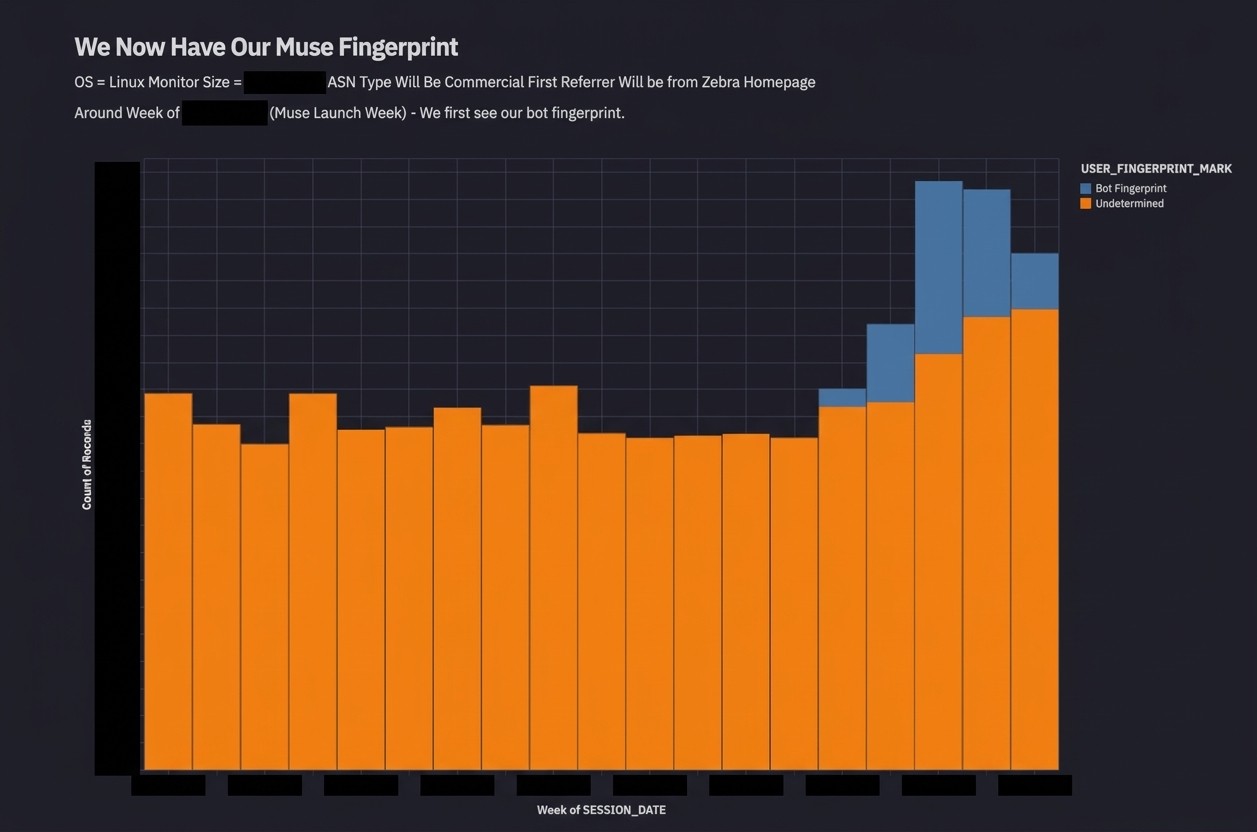
Then, our analyst Kyle McComb spotted a surge of sessions arriving at one hyper-specific dimension: 1919×992. It was exactly one pixel narrower than a standard 1080p screen, running on Linux with no operating system taskbar in sight. It is the unmistakable fingerprint of a fixed-size window on a virtual display—an automated browser spun up by an AI agent. Even more fascinating? Because these agents navigate pages, click buttons, and pause just like real people, standard security filters and bot scores rated the overwhelming majority of these sessions as human.
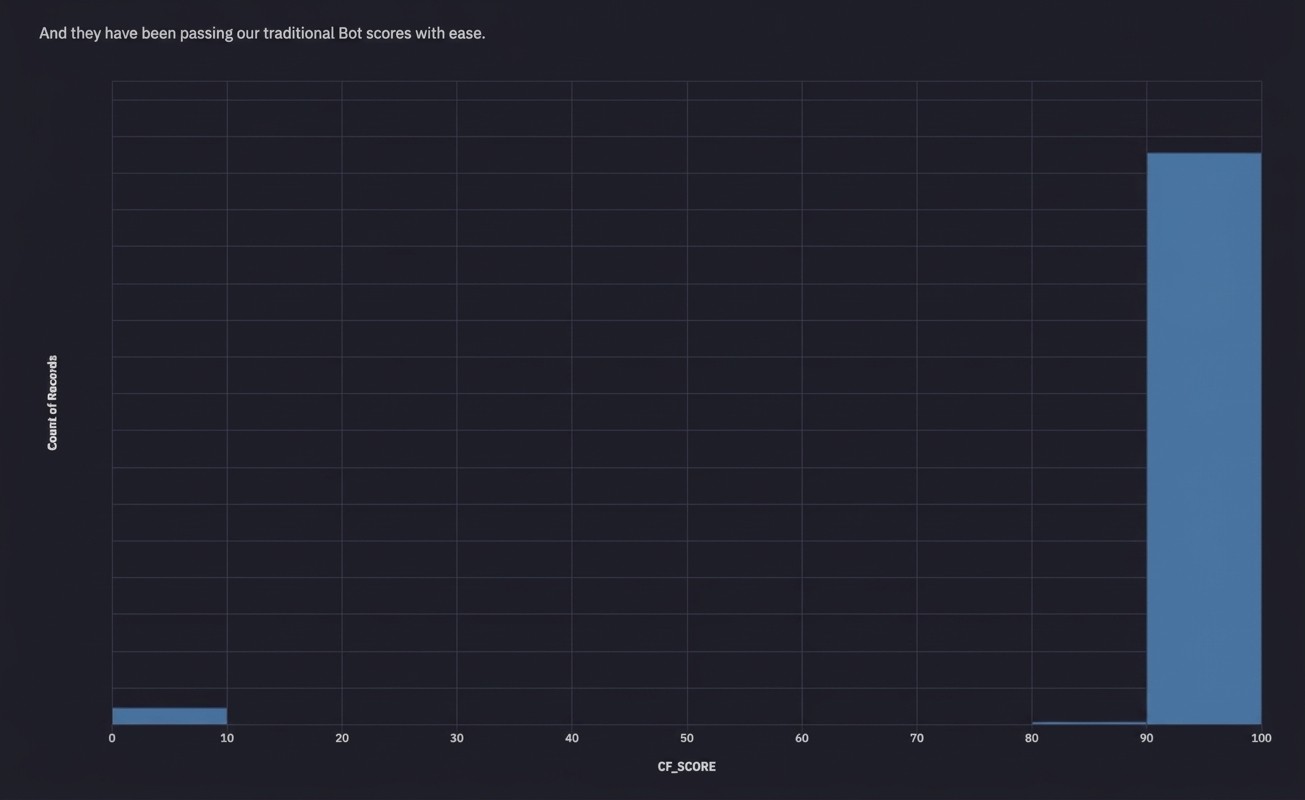
At first, back in June, this footprint belonged mostly to passive content crawlers reading our state insurance guides. But starting in early September, a second behavior emerged. The agents stopped just reading and started shopping.
Within two weeks, volume from these funnel-walking agents grew tenfold, quickly climbing to account for a significant share of our direct desktop segment.
When we looked at how they behaved inside the quote funnel, the numbers were eye-opening:
- Unprecedented Completion: While a smaller fraction of human desktop visitors finish the arduous process of entering their vehicle and driver history to become full applicants, these automated sessions completed the funnel at more than double the human rate.
- Window Shopping (For Now): Despite generating thousands of completed applications in a matter of weeks, none of these sessions bound a policy on their own. Purchasing still requires the customer to step in, helping to ensure our stopgaps for carrier costs and guardrails are working as expected.
Right now, personal agents are doing the heavy legwork consumers hate. They are gathering quotes, testing coverage permutations, and reporting options back to their users. They aren't pulling the trigger on purchases yet—partly because consumers are still testing the waters, and partly because the checkout infrastructure isn't built for them.
But make no mistake: purchasing is next.
Two Protocols, One Day, and Our Stance
Making an AI agent pretend to be a human clicking through a web form is the ultimate "clunky adapter." It’s slow, brittle, and prone to breaking every time a UI designer moves a button.
On October 6, the tech industry took a leap toward solving this when two competing AI service platforms proposed standards on the exact same day:
- Personal Agent Protocol (PAP): Introduced by Sierra and Meta alongside partners like Shopify, Stripe, and Rocket, PAP starts from access—giving personal agents a way to authenticate via OAuth and interact with a brand’s website, APIs (like MCP), or company agent.
- Personal Agent Consent & Trust Protocol (PACT): Introduced by Decagon and Instinct, PACT starts from conversation and delegated trust—building on the Linux Foundation’s Agent2Agent (A2A) standard so a personal agent can prove who it represents and what specific permissions a customer has granted it.
It is fascinating, and genuinely exciting, to watch competing service platforms race to define the underlying rails for agentic commerce.
At The Zebra, we aren't picking sides, and my personal view is that trying to force customers into one walled garden or betting everything on a single proprietary standard is how we end up stuck with a garage full of adapters. Our philosophy is simple: we wake up every day trying to figure out how customers want to buy insurance, and we build whatever infrastructure is required to make that experience safe, reliable, and compliant.
Today, that means we are actively building out our own Model Context Protocol (MCP) server. Rather than forcing an agent like Instinct, Muse, or Gemini to scrape our HTML at 1919×992, our MCP gives any personal agent a clean, structured way to interact with The Zebra. We are still squashing bugs and adding new capabilities to our MCP every day, and I’ll share a deeper technical update on what we’re learning soon.
The Austin Whiteboard Session: 5 Realities Insurance Needs in Every Protocol
Last week, our team gathered in Austin around a whiteboard (not shown) to map out what happens when PAP and PACT collide with the realities of a heavily regulated financial product.
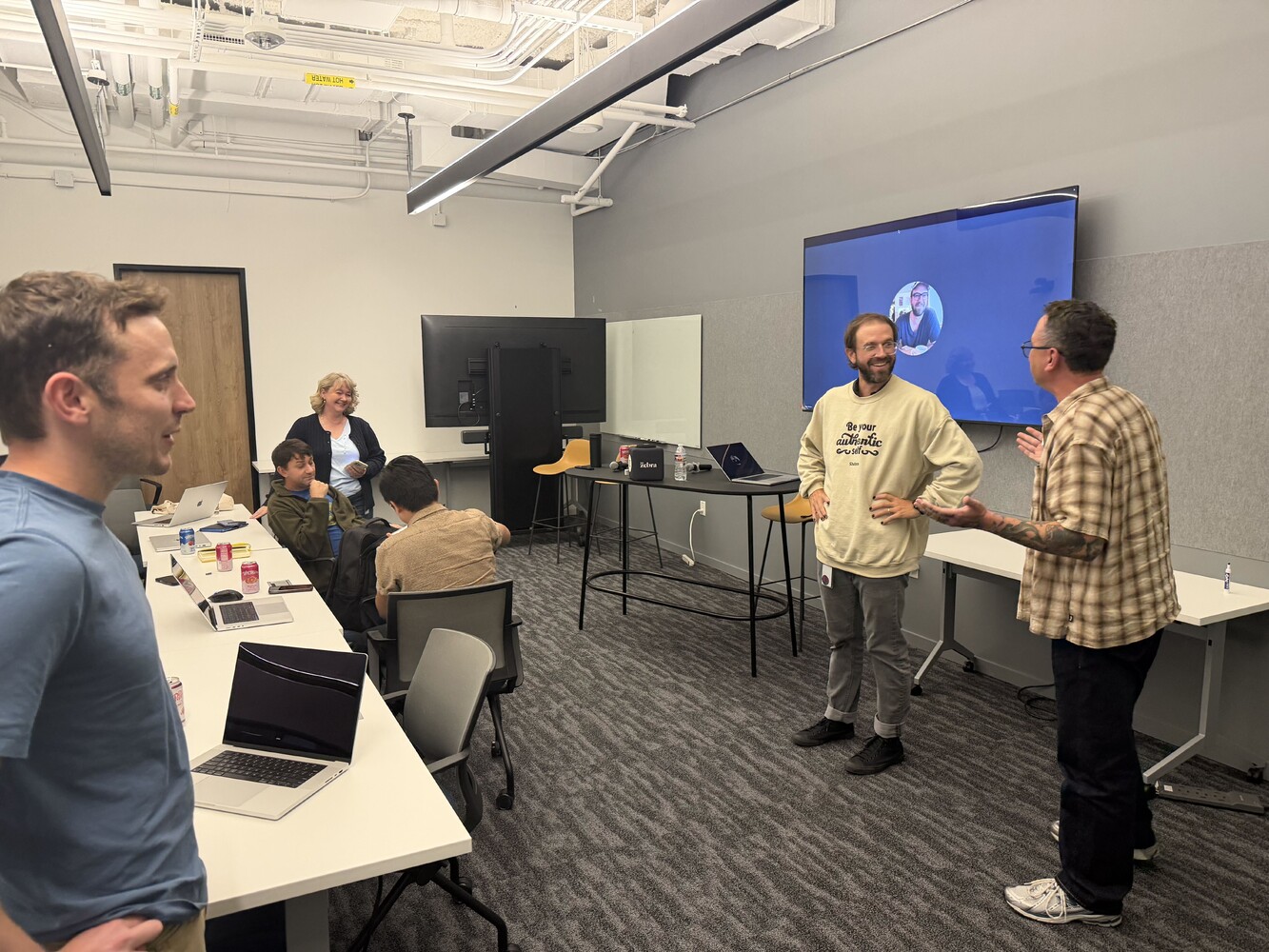
Buying insurance isn't like buying a pair of running shoes or booking a dinner reservation. It is state-regulated, legally binding, underwritten on sensitive personal data, and purchased for an entire household. Both PAP and PACT are fantastic starting points, and because PACT is open on GitHub and PAP is hosting design workshops, we plan to contribute actively to this ecosystem.
Out of our Austin whiteboard session came our "wish list"—the top five capabilities we believe any personal agent protocol must support to work in insurance:
1. Insurance is a Four-Party Conversation, Not Two
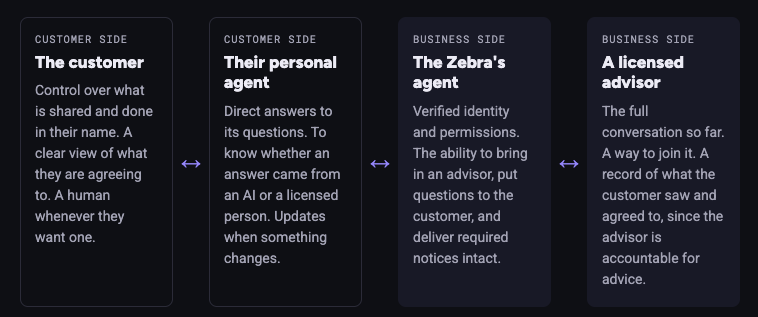
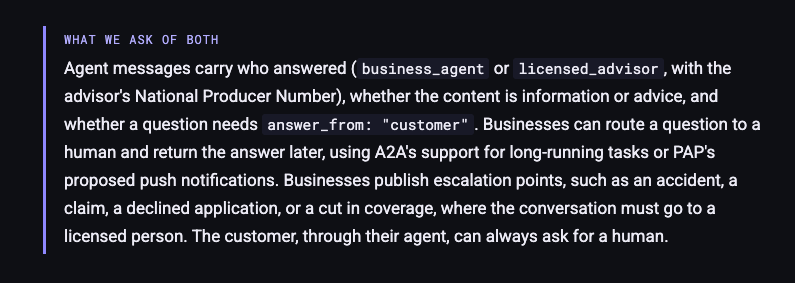
Most agent protocols assume two actors: the consumer’s agent and the business. Insurance actually requires four: the customer, their personal agent, The Zebra’s agent, and a licensed human advisor.
When a personal agent asks, "How much does raising my comprehensive deductible from $500 to $1,000 save me?", that’s a factual question our AI agent can answer instantly ($11 a month). But when the personal agent asks, "My user parks their 2019 RAV4 on the street—should they raise that deductible?", that crosses the legal line into a coverage recommendation.
In all 50 states, giving coverage advice requires a licensed human producer. Protocols need a native way for our agent to seamlessly bring a licensed advisor into the loop, mark the advisor’s response with their National Producer Number (NPN), and allow the advisor to send a direct underwriting question back to the human customer without breaking the session.
2. Verbatim Disclosures (When Summarizing Breaks the Law)
Personal agents are built to summarize. Usually, turning a three-page web document into a two-sentence bullet is a great user experience. In insurance, summarizing a disclosure can break state and federal law.
Whether it’s a state-mandated fraud warning or a Fair Credit Reporting Act (FCRA) adverse action notice when a consumer report, like claims history, impacts a rate, carriers require cryptographic proof that the consumer saw the exact statutory wording.
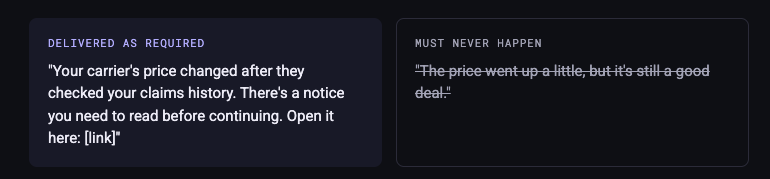
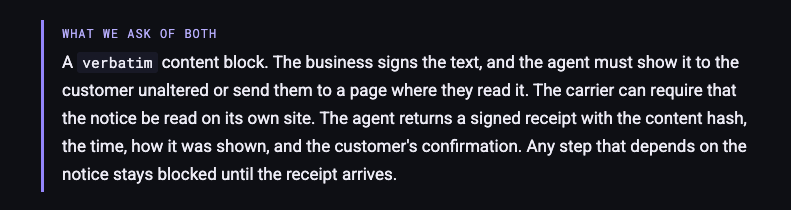
An agent can never summarize a legal notice into, "The price went up a little, but it's still a good deal." Protocols must support a signed verbatim content block that forces the personal agent to render the exact text unaltered—and return a signed receipt proving the user acknowledged it—before a quote can move forward.
3. Granular Permissions by Action and by Household
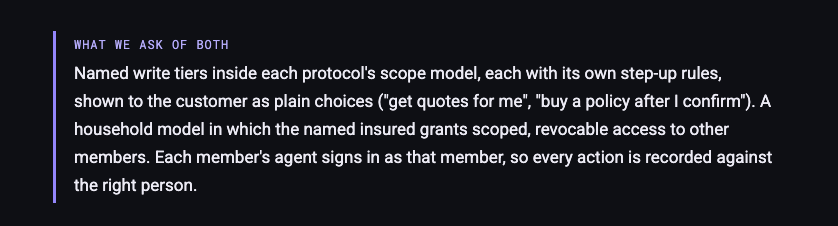
Simple "read" versus "write" permissions don't map to insurance. You can’t even get an insurance quote without submitting personal rating data, which is technically a write action. Yet submitting data for a quote carries vastly different stakes than binding a policy or setting up autopay. We need tiered write scopes (quote, profile.write, bind, pay) with distinct step-up confirmation rules.
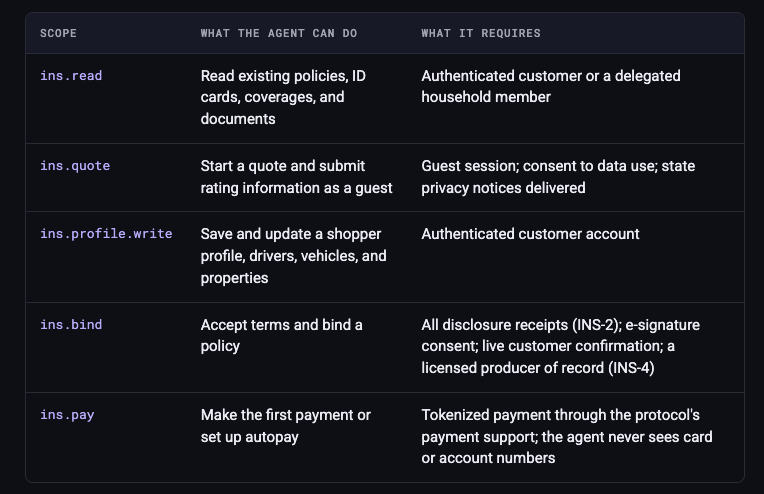
Furthermore, insurance is a household product. If a 16-year-old gets into a minor fender-bender, they should be able to ask their personal agent to pull up the family’s proof-of-insurance ID card and claims number. Their agent should not have permission to drop collision coverage or cancel the family policy. Protocols need household delegation built in from day one.
4. Verifiable "Agent Credentials"
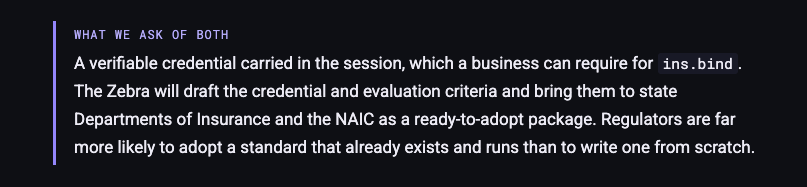
Human insurance agents pass state exams, complete continuing education, and carry licenses they can lose if they mislead a consumer. We aren't asking state regulators to license software, but before a carrier allows an external AI agent to bind a policy, that agent should carry a verifiable credential.
That credential should prove four things: that the agent operates under an accountable Producer of Record, that it has passed published Property & Casualty compliance evaluations (and is re-tested when its underlying model updates), that it enforces verbatim disclosures, and that it maintains an auditable session log for state regulators.
5. Compliant Attribution for Verified Leads
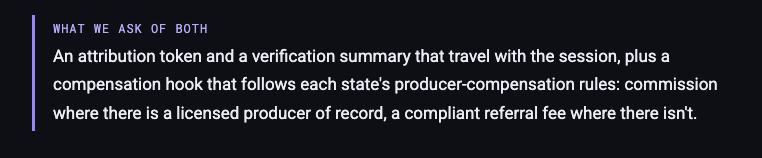
When a personal agent brings a fully verified shopper to the table—identity confirmed, vehicle data structured, and disclosures acknowledged—it has done meaningful work. Creating a standardized attribution token gives agent developers an incentive to follow the rules. However, because insurance compensation is strictly regulated by state law, protocols need a flexible compensation hook that distinguishes between paying a commission (when a licensed producer is attached) and paying a compliant referral fee where state law allows (when one isn't), disclosed to the customer either way.
Looking Ahead: Keep the Customer at the Center
I plan to keep posting and talking about whatever we map out on our whiteboards in Austin. We also strongly hope that all protocol creators commit these standards to a neutral home—much like Anthropic did when donating MCP to the Linux Foundation—so the entire industry can build on shared ground.
Watching thousands of 1919×992 agent sessions navigate our site over the last month has been one of the most energizing moments of my career. We are watching consumer behavior fundamentally rewire itself in real time.
If we keep our eyes on the customer rather than getting caught up in protocol turf wars we can build an ecosystem where personal agents and human advisors work together seamlessly, no bulky adapters required.
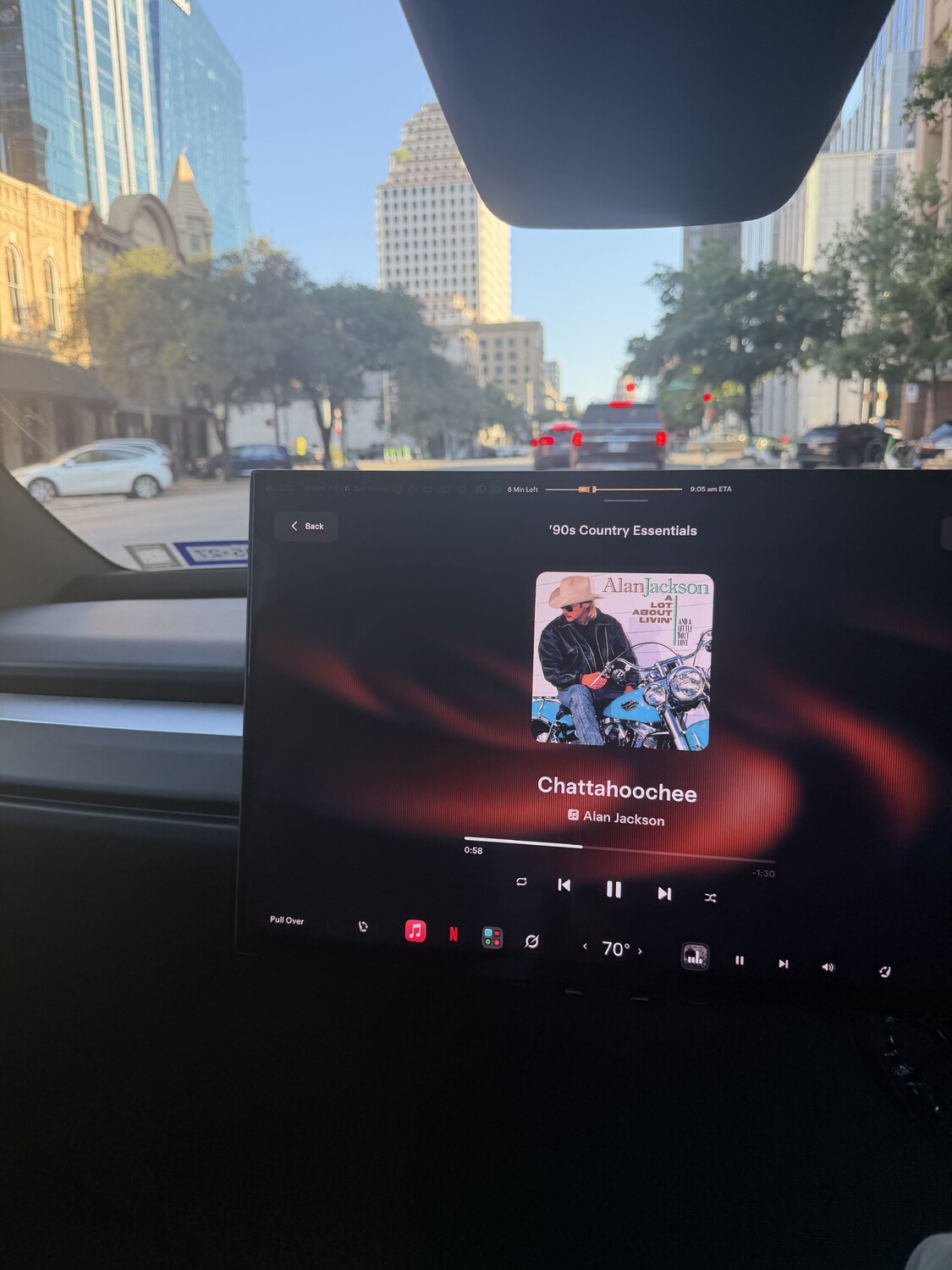
Easter Egg for those who made it to the end: Here’s my pic of my Cybercab playlist for riding through Austin.
Views expressed here are my own and not those of my employer or any affiliated organization. Content is shared for general informational purposes only and should not be taken as legal, financial, insurance, or other professional advice. For advice specific to your situation, consult a qualified professional.